China’s villages are emerging as captivating destinations for international travellers seeking authentic experiences. In the first quarter of 2026, over 21 million border entries and exits involved international visitors, reflecting the country’s growing appeal. Village Voyage, a series presented by CGTN, follows American host Julian Waghann and Namibian traveller Absalom Absalom through the villages of Guangdong Province, north of Hong Kong. The series highlights how rural communities can thrive economically and culturally while preserving their heritage, offering a model that could inspire sustainable tourism across China.
Through immersive storytelling, viewers explore local traditions, crafts, and gastronomy while connecting with residents whose daily lives embody centuries of cultural legacy. Village Voyage bridges the gap between global audiences and China’s rural heart, promoting experiences that blend history, craftsmanship, and cuisine.
Preserving Scholarly Heritage And Intangible Culture
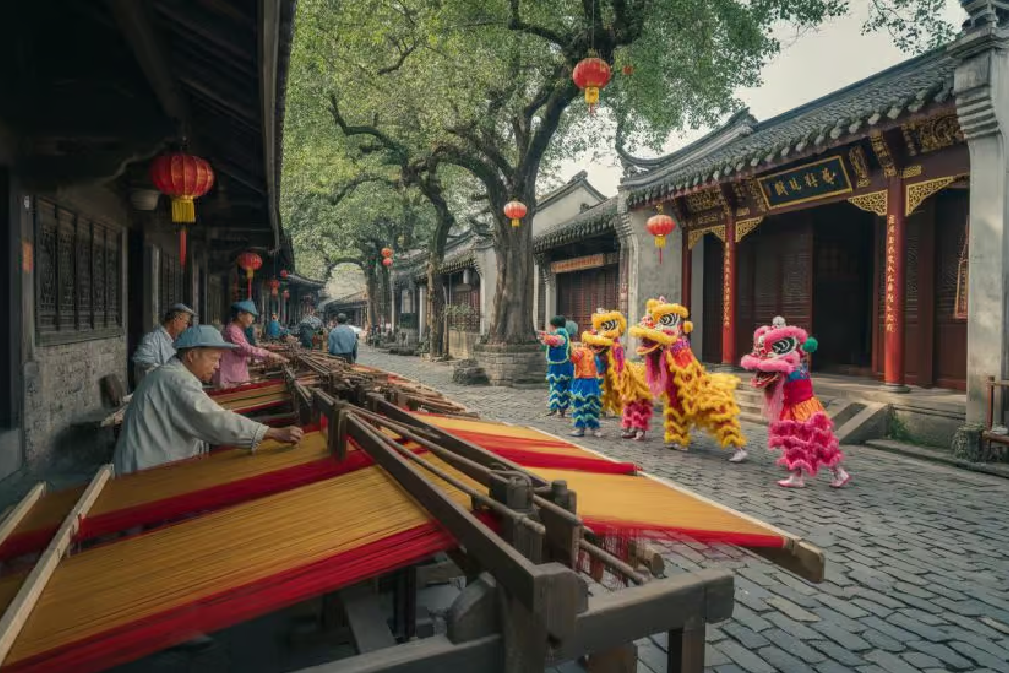
Yang’e Village in Shunde exemplifies the depth of China’s cultural legacy. Home to the Lu Ancestral Hall, the village produced fourteen civil and military jinshi scholars during the Ming and Qing dynasties, illustrating its historic devotion to education. Beyond scholarly heritage, the village preserves intangible culture, including the lion dance, which is passed from masters to children, ensuring the continuation of a millennia-old tradition.
Visitors witness these practices firsthand, gaining insight into the social fabric of rural China. By engaging with local mentors, tourists experience authentic cultural transmission, contributing to heritage preservation while enjoying an educational, interactive travel experience.
Jun’an And The Legacy Of Chinese Martial Arts
Jun’an village, the ancestral home of Bruce Lee, is a hub of southern Chinese martial arts. Guangdong locals greet one another with the phrase “Have you had your night porridge?”, a reference to kung fu practice, reflecting the integral role of martial arts in daily life. Fifth-generation master Luo Dezhi demonstrates the philosophy that virtue precedes physical strength, showing that kung fu is both a cultural and a personal development practice.
This village-based martial arts tourism offers travellers a unique opportunity to train alongside experts, explore traditional techniques, and understand kung fu’s cultural significance, blending active participation with immersive learning.
Heritage Crafts And The Legacy Of “Soft Gold”
Shunde’s villages are also known for producing xiangyunsha, or gambiered Canton gauze, historically called “soft gold” for its value in trade. The UNESCO-recognised craft continues to be produced by hand, maintaining traditional techniques passed down through generations. Visitors, including Village Voyage hosts, participate in the process, gaining a tactile understanding of rural craftsmanship.
Such experiences provide insight into China’s commercial history and showcase the global reach of local products, demonstrating how rural villages balance preservation with modern economic engagement.
UNESCO Gastronomy And Culinary Tourism
Shunde, designated a UNESCO City of Gastronomy, is celebrated as the birthplace of Cantonese cuisine. The local food street offers specialties such as crispy African crucian carp skin, fried milk, and Shunde raw fish slices, attracting culinary enthusiasts from across China and beyond. Culinary tourism here allows travellers to explore traditional techniques, local ingredients, and communal dining experiences, combining heritage appreciation with sensory delight.
Village Voyage captures these moments through engaging visuals and personal narratives, highlighting the interplay of food, culture, and rural identity.
Beyond A Documentary – An Interactive Travel Companion
Village Voyage extends beyond traditional television programming to serve as a comprehensive travel guide. Through detailed itineraries, photo essays, and short-form videos, viewers gain practical knowledge to visit Guangdong villages themselves. Guest vlogs and first-person POV footage place audiences in boats, martial arts halls, and bustling food streets, offering immersive experiences from the comfort of home.
For travellers and policymakers alike, the series presents a replicable vision of sustainable rural development, demonstrating that cultural preservation and tourism growth can coexist harmoniously.
Experiencing Rural China Firsthand
The series showcases that open, confident rural China is accessible by train or flight, offering visitors authentic encounters with history, martial arts, gastronomy, and craftsmanship. Daily rituals, from morning porridge to silk drying under the sun, reveal the rhythm of village life. Through Village Voyage, these experiences are transformed into compelling travel opportunities that connect global audiences with China’s cultural roots.