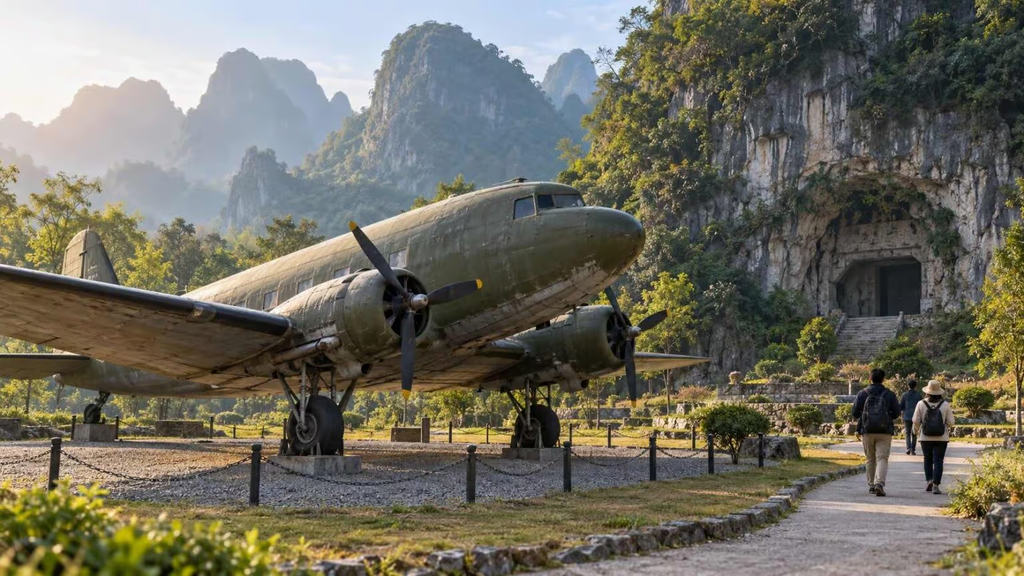
China’s Flying Tigers itineraries take visitors to five cities to commemorate the volunteer aviators of WWII. In 2026, many relatives and students journeyed to Nanjing, Wuhan, Liuzhou, Guilin, and Kunming, to remember the 85th anniversary of the arrival of the American Volunteer Group (AVG). Travelers have multiple sites to remember the AVG, including memorials in Nanjing and Liuzhou, as well as the remains of an airfield in Guilin. This guide presents all the sites relating to the remembrance of the AVG, and provides information about public access. Memoriams require less restrictions for access, whereas others may restrict access to commemorative events.
Five cities, five different ways to encounter the history
The Flying Tigers were American volunteer pilots who helped defend China against Japanese forces during the Second World War. Eighty-five years later, their story is being told through aircraft, personal possessions, former airfield sites and the names of those who died.
A traveller can connect these places in one journey. But the connection is an editorial itinerary, not a route announced or operated by the Chinese government. There is no single ticket, published trail map or verified visitor service covering all five cities.
Flying Tigers sites in China begin with remembrance in Nanjing
Nanjing gives this journey a solemn starting point. The city’s Anti-Japanese Aviation Martyrs Memorial Hall remembers airmen from China, the United States and other countries who died during the war.
The site has a public exhibition hall and a monument bearing the names of thousands of aviation martyrs. According to the Zhongshan Mountain National Park visitor guide, the hall normally opens from 09:00 to 17:00, with last entry at 16:30, and closes on Mondays. Travellers should check for holiday changes before setting out.
Nanjing also hosted the launch of the 85th anniversary commemorations in July 2026. Guests visited an exhibition on American support for China and laid flowers at the memorial. For an independent visitor, the museum is the practical destination; attendance at an anniversary ceremony should not be assumed.
Wuhan shows how the story is reaching a new generation
Wuhan’s place on this itinerary is different. In July 2026, a delegation of about 100 Americans, including descendants of veterans, teachers and students, visited the city for cultural and educational activities linked to the Flying Tigers friendship programme.
The visitors also explored other parts of Wuhan’s history and culture. That makes the city an example of how a wartime connection can lead to a wider exchange visit, rather than a stop defined by one museum.
Independent travellers should plan Wuhan on its own merits. The anniversary delegation’s programme does not establish that its school activities or meeting venues are open to walk-in visitors. Anyone hoping to follow a particular commemorative visit needs to identify the venue and confirm access first.
Liuzhou turns family memories into a permanent exhibition
In Guangxi, Liuzhou offers a more direct museum stop. A permanent Flying Tigers exhibition opened at the Liuzhou Military Museum in September 2025. It brought together more than 1,000 historical items, including uniforms, letters and diaries associated with the wartime partnership.
These objects make the history personal. A flight suit shows the working life behind the familiar aircraft images. A letter or diary can bring a visitor closer to the people who left home, served in China and formed bonds with local communities.
Liuzhou’s 2026 government work report also calls for further protection planning for Flying Tigers sites and museum development. That is an official intention, not evidence that every proposed improvement is already available to visitors.
Guilin offers the most tangible wartime landscape
Guilin is the stop where visitors can connect an exhibition with the ground on which aircraft once operated. The Flying Tigers Heritage Park stands at the former Yangtang airfield in the city’s Lingui district.
A Guangxi government tourism page describes a preserved cave command post, aircraft shelters and a rock associated with commander Claire Lee Chennault. It also records a displayed C-47 transport aircraft and other wartime objects. The park opened in 2015.
The setting changes the way a traveller reads the story. Nanjing asks visitors to reflect on loss, while Liuzhou presents the record through objects. Guilin lets them see parts of a former operating site. It is a strong centrepiece for a heritage trip, though opening arrangements for the park and its individual displays should be checked locally.
Kunming connects the sites to a wider aviation story
Kunming has a longstanding association with the Flying Tigers and wartime flying in south-west China. The city’s official tourism information identifies a Flying Tigers exhibition hall at Kunming City Museum and describes other traces of the aviation history around the city.
That makes Kunming a fitting final stop: visitors can move from individual memorials and surviving structures to the broader network of air operations. It also calls for careful planning. An older tourism listing establishes the display’s historical identity, but travellers should confirm its current exhibition status, hours and any booking requirements with the museum before making it the reason for a journey.
What the anniversary means for tourism
The 2026 commemorations show that these places still bring people across borders. Descendants, students and educators have visited China to see sites, meet their peers and learn about a shared period of history.
They do not, however, provide a measure of tourist demand for a five-city itinerary. No official figure reviewed for this article counts visitors travelling specifically between these Flying Tigers sites. Nor is there a published revenue or employment estimate for such a route.
The wider travel context is substantial. China’s Ministry of Culture and Tourism reported more than 150 million inbound visits in 2025, up more than 17% year on year, with inbound traveller spending above US$130 billion. Those are national figures; they must not be presented as the economic impact of the Flying Tigers commemorations.
For local museums, guides and accommodation providers, the anniversary creates a chance to explain sites that many international visitors may not know. Whether that becomes a lasting tourism product depends on clear opening information, accurate interpretation and practical links between the cities. No official five-city product has been confirmed.
Planning an independent visit
This is a multi-city research trip, not a short museum circuit. Build the journey around the confirmed public sites in Nanjing, Liuzhou and Guilin, then treat Wuhan and Kunming as stops whose Flying Tigers activities or displays need further checks.
Before booking, ask each venue about opening days, reservations, language support and whether every part of the site is accessible. Do not assume that a commemorative event attended by a delegation is open to the public.
International visitors must also check the entry rules for their own nationality and journey. A visa-free transit arrangement, where applicable, has conditions about ports, permitted areas and onward travel; it should never be treated as automatic permission for a five-city itinerary.
A journey that needs care as well as curiosity
Anniversaries of historic events bring renewed interest in associated sites. There are several places in China where rememberings are held for Chinese civilians and U.S. airmen of World War II. Some of these places have museums. Others have monuments. Still others maintain airfields. One of the best ways to see these places is to take the train, as traveling overland by this means allows the greatest flexibility. Many of the sites are far enough apart that travel by air would considerably reduce the time required to make the trip. Each site is deserving of a separate visit. Let the Chinese hosts give you the history. Don’t give an unsanctioned tour of the sites to make a political statement.