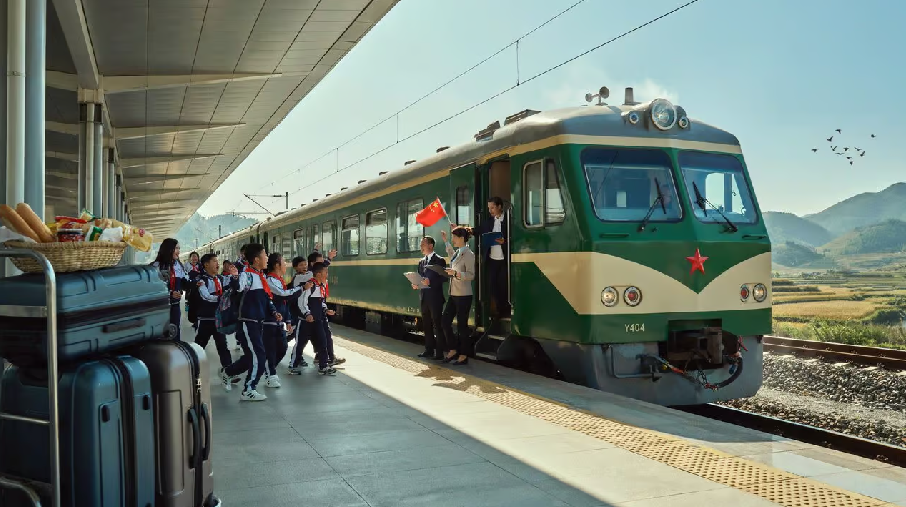
China has come up with a cool idea for train travel. They are making the actual trip part of the vacation. The Y404 study tour train went from Qiqihar in Heilongjiang Province to Beijing on 9 August 2026. There were 598 teachers and students on the train. They had things like music and dance performances and other fun things to do on the train. This made the train feel like a classroom that was moving. The Y404 study tour train is a part of China’s plan for train travel and tourism. china’s train travel is getting bigger and better.
Why Is China’s Y404 Study Tour Train Attracting Traveller Attention?
The Y404 service carried 598 teachers and students from Inner Mongolia’s Xing’an League from Qiqihar towards Beijing. China Railway Harbin Bureau Group organised the special journey as its first Heilongjiang-to-Beijing study-tour train of the year. The concept immediately stood apart from normal transportation because the experience started before passengers reached their destination.
Railway staff turned the train into what officials described as a mobile classroom. Beijing Opera performers interacted with the young travellers, while other artists presented Mongolian songs and cultural activities. Students could therefore travel, socialise and learn during the same journey. It shows how trains can become an active part of a tourism programme instead of simply carrying visitors between destinations.
Can Ordinary Tourists Buy Tickets for the Y404 Train?
Travellers should understand one crucial point. No public individual Y404 fare or general booking announcement was published in the official sources reviewed for this journey. The official account identifies Y404 as a study-tour special carrying an organised group. Travellers should therefore not assume that it works like an ordinary scheduled Qiqihar-to-Beijing train with seats routinely offered to independent passengers.
For normal Chinese railway journeys, China Railway states that travellers can buy tickets through authorised station counters, ticket machines, telephone booking where available, and the official Railway 12306 website or mobile application. China Railway specifically identifies 12306 as its official online ticketing platform, making it the safest place to check whether any future tourism train becomes available for individual public sale.
How Can Groups Access Special Railway Travel in China?
The more interesting opportunity may exist for organised groups. Official railway information published through the Fujian Provincial Government says groups can apply for group tickets or customised group trains. A special train generally depends on sufficient passenger numbers, suitable travel dates that avoid severely constrained operating periods and a route that railway scheduling authorities can accommodate.
Smaller groups also have options. The same official guidance says groups of 20 or more people travelling on the same date and train can enquire about group-ticket arrangements through the 12306 customer service system at least three days before departure. That makes customised rail travel particularly relevant for schools, organisations, associations, corporate groups and potentially larger organised tourism parties.
Travellers interested in similar journeys should:
- Check the official Railway 12306 platform for publicly sold trains.
- Ask an authorised organiser whether a themed journey is a group-only product.
- Confirm whether accommodation, attractions or transfers form part of the package.
- Never assume a special train number automatically means tickets are available individually.
- Verify prices and conditions before making other non-refundable travel arrangements.
What Benefits Can Themed Trains Offer Tourists?
The biggest benefit is time. Conventional rail passengers normally wait until reaching a destination before tourism activities begin. Themed services can make the railway journey itself part of the attraction. China’s national railway-tourism policy now encourages cultural performances, intangible cultural heritage experiences, local products and specialised food services aboard tourism trains.
There can also be practical advantages for organised travellers. Chinese railway operators have increasingly used dedicated waiting areas, customised passenger handling and closer connections between railway stations and local transport for group journeys. Government policy specifically calls for stronger connections between stations, urban transport, customised road services and buses serving tourist attractions, reducing the troublesome “first kilometre” and “last kilometre” of a trip.
Why Does The Qiqihar To Beijing Journey Matter for Family Tourism?
The Y404 concept is especially relevant to family travel and educational tourism because it combines transportation with activities that can keep younger passengers engaged. Heilongjiang has already been developing “railway plus study tour” products. The provincial government previously reported customised transport plans, station guidance and onboard educational courses as part of its efforts to serve growing youth travel demand.
That approach changes the perceived value of a railway ticket. Parents and group organisers are no longer paying only to move passengers between two cities. A carefully structured study-tour product can combine transportation, supervision, cultural exposure and destination experiences. For tourism businesses, this creates opportunities to build longer packages around rail journeys while reducing some of the organisational complexity of moving large groups.
Is China Planning More Tourism Trains After Y404?
Yes. The national strategy is considerably bigger than one study-tour train. In June 2026, eight Chinese authorities, including the Ministry of Culture and Tourism and China State Railway Group, issued measures designed to deepen the integration of railways and tourism. They called for more themed products, tourism-oriented railway facilities and stronger market participation.
One particularly significant target is the creation of more than 160 dedicated railway tourism train sets nationwide by 2030. Authorities also want more tourism routes, specialised ticket products and integrated services covering journey planning, attraction information, hotels, transport connections and ticket reservations through railway platforms. That policy suggests travellers could encounter substantially more rail-based holiday products over the coming years.
Could Future Tourism Trains Become Easier to Book?
China’s latest policy points directly towards easier booking. Authorities want to improve group-ticket procedures, expand online services for tourism groups and introduce more differentiated and potentially discounted fare structures. They also support fixed-route tourism services where the railway ticket itself becomes the main product, which could eventually make some themed experiences much more accessible to independent travellers.
That distinction matters today. Y404 itself should be viewed as an organised study-tour service unless an authorised railway channel announces public sales. However, the policy surrounding it is moving towards broader tourism access. Travellers planning future China trips should increasingly watch 12306 not only for ordinary transport, but also for emerging tourism-oriented rail products and special routes.
What Should Travellers Take Away From The Y404 Launch?
For visitors, the most exciting part of the Y404 story is not simply that 598 students travelled from northeast China towards Beijing. It is the transformation of railway time into tourism time. Performances, cultural interaction and organised services demonstrate how China can use its enormous railway network to connect transportation, education and visitor experiences within one travel product.
Conclusion
China’s Y404 study tour train shows how railway tourism is changing. It now offers cultural learning, entertainment, and meaningful trips for travellers. This unique train from Qiqihar to Beijing was made for organised students, not individual tourists, but it showcases China’s goal to create innovative rail travel products. Future tourism trains might provide visitors with more engaging experiences, simpler booking options, and better links between destinations, attractions, and local cultures. The growth of China’s railway tourism network presents a new chance for travellers looking for memorable journeys that start before they arrive at their final destination.