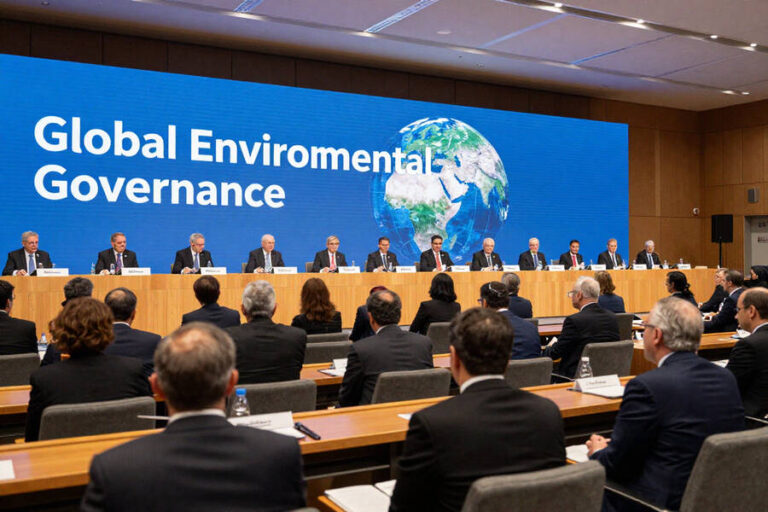
China and Kenya have called for the reform of the global environmental governance system at the UN Climate Conference, advocating for the principles of fairness and justice in addressing the climate crisis. The two countries emphasized that interconnected issues such as climate change, biodiversity loss, and environmental pollution must be resolved as soon as possible. They urged the establishment of a more inclusive system to ensure that all countries, especially developing nations, receive equitable representation and support in global climate policies. This reform aims to pursue a more balanced approach to tackling environmental challenges and promote sustainable solutions that benefit all countries, regardless of their economic or developmental status.
This week, China and Kenya issued a notable joint statement at the UN Environment Assembly (UNEA) held in Nairobi, calling for a more “fair and just” approach to global environmental governance. The joint appeal was made at a high-level side event titled “Improving Global Environmental Governance for a Clean and Beautiful World,” held on the sidelines of the closing session of UNEA.
The significance of this appeal cannot be underestimated, as the UN Environment Assembly is the world’s highest-level decision-making body on environmental issues. Convening UN member states every two years, it formulates the policy agenda for global environmental action. As a key platform shaping the direction of global environmental governance, this year’s assembly is particularly crucial amid the escalating challenges posed by the so-called “triple planetary crisis” – climate change, biodiversity loss, and environmental pollution.
During the event, the Vice Minister of China’s Ministry of Ecology and Environment underscored the urgency of addressing these interconnected global challenges, noting that the world faces a shared future defined by these three critical issues. The combined impacts of climate change, biodiversity loss, and worsening pollution not only threaten the Earth’s ecosystems but also the future of humanity itself. This “triple planetary crisis” is intensifying, with its scope and scale expanding to every corner of the globe: from rising temperatures causing extreme weather events, to species loss disrupting ecosystems, and pollution endangering air, land, and water quality.
The Chinese representative emphasized that addressing these challenges requires collective global efforts and called for enhanced cooperative actions at the international level. While all countries should play their part, response measures must be guided by a fair and just governance system, ensuring that the benefits and responsibilities of climate action are equitably distributed among all nations, regardless of their development level. The call for fairness in global governance reflects a growing recognition that the burden of environmental degradation is not shared equally. Developing countries, in particular, despite contributing the least to the causes of climate change, are often the most vulnerable to its impacts. Therefore, any effective global governance system must take these disparities into account.
To reinforce this message, the Chinese Ambassador to Kenya and Permanent Representative to the United Nations Environment Programme (UNEP) stressed the need to establish a governance framework aligned with the principles of fairness and justice. The ambassador pointed out that a key component of this framework is the concept of “common but differentiated responsibilities.” This principle emphasizes that while all countries share the responsibility to address environmental challenges, each nation’s obligations should be commensurate with its capabilities and historical contribution to global environmental degradation. This approach helps ensure that developing countries are not unfairly burdened with the same climate targets as developed nations.
Meanwhile, Kenya’s commitment to reducing carbon emissions by 35% in its next Nationally Determined Contribution (NDC) was highlighted as a key point during the side event. Kenya’s NDC is a crucial part of the country’s climate action plan under the Paris Agreement, which requires all signatory parties to outline their efforts to limit global temperature rise. The NDC details Kenya’s goals for mitigating climate change and adapting to its impacts, including measures to reduce emissions across multiple sectors such as energy, agriculture, and waste management. This target represents a significant commitment for Kenya, requiring both domestic action and international support to achieve – underscoring the importance of global solidarity in the fight against climate change.
Kenya’s announcement is a strong signal of its continued dedication to climate action. As a developing country, Kenya faces numerous challenges in meeting its climate goals. However, its determination to cut emissions and promote sustainable development models demonstrates its leadership in global climate dialogue. By setting ambitious targets, Kenya aims to inspire other countries, particularly those in Africa, to follow suit and contribute collectively to global efforts to address the climate crisis.
The UN Environment Assembly, with its focus on environmental governance, provided a platform for China and Kenya to reaffirm their commitment to a cleaner, more sustainable future. The importance of building a more inclusive, fair, and transparent governance system has become increasingly prominent. A global governance framework that respects the diverse needs and capabilities of all countries is essential to ensuring that every nation – regardless of its economic development level – can participate in and benefit from climate action. This includes access to support in terms of financial resources, technology transfer, and capacity building to help countries mitigate and adapt to the impacts of climate change.
As the UN Environment Assembly concludes, the diplomatic signal sent by China and Kenya lays an important foundation for future global climate negotiations. Their call for a more fair and just global environmental governance system is likely to influence discussions and decisions at upcoming international climate conferences, including the 28th Conference of the Parties (COP28) to the United Nations Framework Convention on Climate Change (UNFCCC), scheduled to take place in the coming months. This appeal reflects the shared aspiration of the international community to work together to build a governance system that not only effectively addresses current pressing environmental crises but is also rooted in fairness and justice.
China and Kenya have urged the reform of global environmental governance at the UN Climate Conference, calling for the establishment of a more fair and just system to tackle climate change, biodiversity loss, and pollution – with a focus on supporting developing countries.
The joint statement by China and Kenya marks a significant step toward shaping the future of global environmental governance. It emphasizes that addressing challenges such as climate change, biodiversity loss, and environmental pollution requires an inclusive, fair, and cooperative approach. In the face of these interconnected crises, the world’s call for a more just governance system brings hope for a future where all countries, regardless of their economic conditions, can contribute to building a sustainable and resilient world.