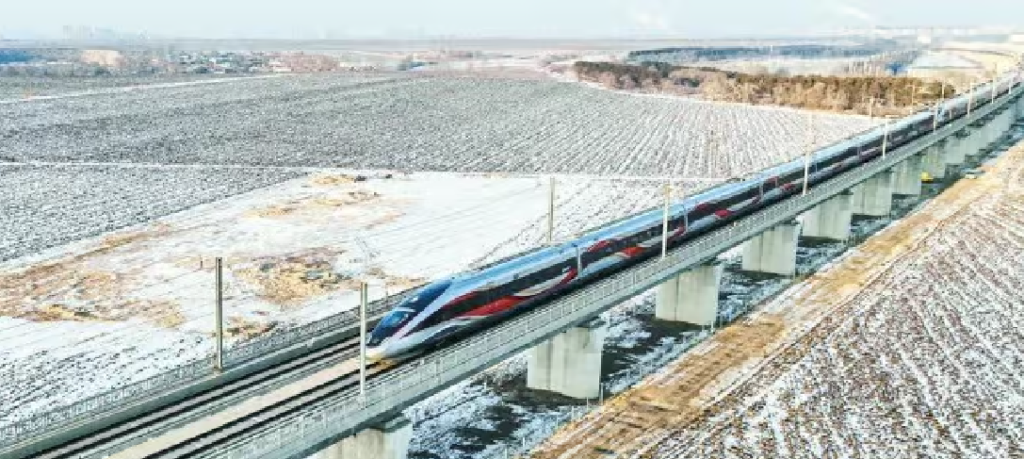
A major transport and tourism transformation has been initiated in China, where rail tourism development, domestic travel expansion, and service sector growth strategy have been placed at the centre of a long-term national policy. Chinese authorities have been observed launching a comprehensive initiative aimed at strengthening rail-based tourism through the year 2030, with a strong focus on increasing domestic consumption and modernising the travel experience.
Under the newly introduced framework, more than 160 special tourist train services are expected to be introduced by 2030. This large-scale expansion has been designed to diversify travel offerings, enhance tourism accessibility, and strengthen the role of rail transport as a key driver of internal mobility.
The initiative has been positioned as part of a broader economic strategy, where tourism and transport integration is being used to stimulate consumption, support regional development, and expand service-based economic activity across multiple provinces.
Government-Led Policy Package Introduces 15 Measures for Rail Tourism Upgrade
A coordinated policy framework has been issued by multiple Chinese government agencies, outlining 15 targeted measures aimed at upgrading rail tourism infrastructure and improving service quality across the national railway system. These measures have been structured to modernise operations, enhance passenger experience, and support the development of diversified tourism products.
Rail Network Capacity Strengthened by Massive Passenger Growth
China’s railway system has been reported to have achieved extraordinary passenger volumes, with more than 4.25 billion passenger trips recorded last year. This figure has been interpreted as a reflection of strong domestic mobility demand and the increasing reliance on rail transport for both tourism and everyday travel.
In addition to this growth, nearly 2,500 tourist train services were operated, marking an increase of more than one-third compared with previous years. This expansion has highlighted the growing popularity of rail-based tourism and the increasing diversification of travel experiences offered within the national transport system.
The rise in tourist train operations has been linked to stronger demand for curated travel experiences, where rail journeys are being designed not only for transportation efficiency but also for leisure, sightseeing, and cultural exploration.
Tourist Train Expansion Positioned as Key Driver of Domestic Consumption
The introduction of more than 160 special tourist trains has been positioned as a strategic mechanism to stimulate domestic consumption across China. Rail tourism has been identified as a powerful tool for encouraging travel spending, supporting local businesses, and promoting regional tourism destinations.
By expanding rail-based tourism services, economic activity is expected to be distributed more evenly across different regions, including less-developed inland areas. This approach has been designed to strengthen regional tourism development, domestic consumption growth, and service industry expansion.
Tourist trains have been structured to cater to multiple segments of travellers, including leisure tourists, cultural explorers, and long-distance domestic travellers. This segmentation approach has been intended to increase accessibility while enhancing the diversity of travel experiences.
Rail Tourism Modernisation Focuses on Experience-Based Travel Products
A significant shift has been observed in how rail services are being designed, with increased emphasis placed on experience-based travel products. Train journeys are being restructured to include themed routes, cultural stops, and enhanced onboard services that align with tourism expectations.
Modernisation efforts have focused on improving comfort, service quality, and integration with destination tourism offerings. This transformation has been guided by the objective of turning rail travel into a fully immersive tourism experience rather than a purely functional mode of transport.
The development of specialised tourist trains has been positioned as part of a broader evolution in China’s travel industry, where transportation infrastructure is being aligned more closely with cultural and leisure tourism markets.
Integration of Rail Systems and Tourism Sectors Strengthens National Strategy
The expansion of rail tourism has been closely linked to broader national strategies aimed at integrating transportation systems with the tourism industry. By aligning railway operations with tourism development goals, a more interconnected and efficient travel ecosystem is being created.
This integration has been designed to support coordinated growth across multiple sectors, including hospitality, entertainment, cultural tourism, and regional economic development. Rail systems are increasingly being used as platforms to distribute tourism flows across different destinations, reducing congestion in major cities while supporting emerging tourism zones.